



October 23, 2026
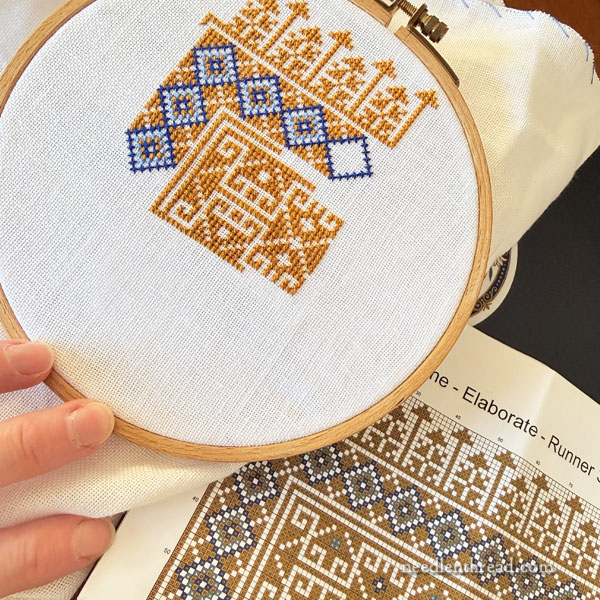
The Next Grab-and-Go Project – Elaborate!
Well, welcome to a late Friday! Normally, I write blog posts at least a day in advance. When in full Work Mode, I plan, outline, and write up to three weeks out! And then I adjust before publishing to bring current events up to date.
But it doesn’t always work that way when life is up-ended with other concerns. And so, here I am, on a late Friday morning, catching you up with a current project.
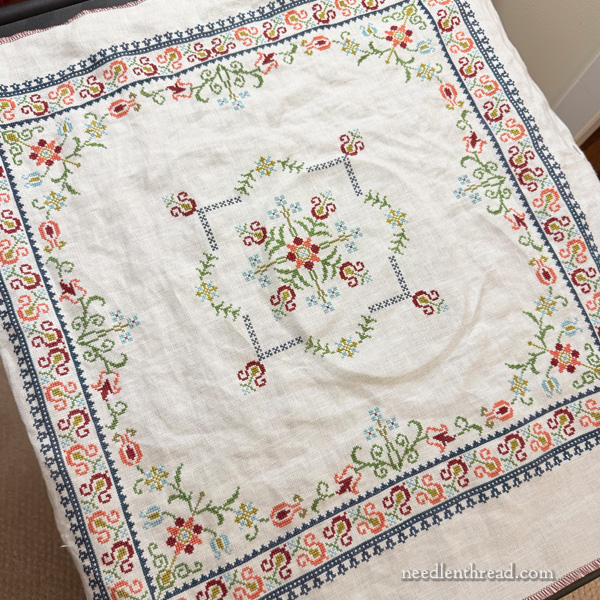
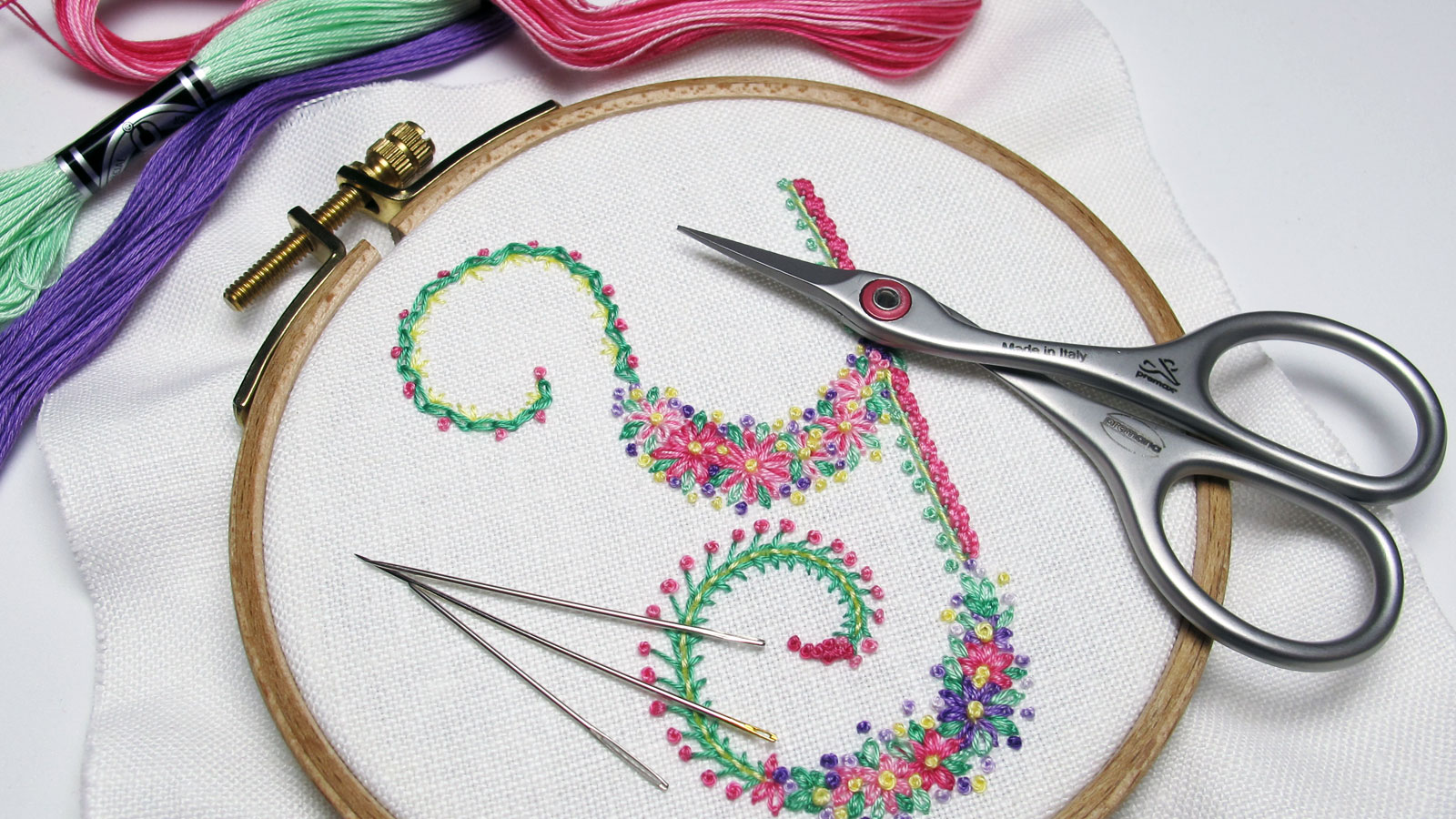
I always like to have a grab-and-go project on hand, for any circumstances, even when everything is going well. You just never know when you’ll have the opportunity to, say, stitch over at a friend’s house, or sit outside on the porch with someone, or when you’ll have time to stitch when you’re traveling. And that’s when a grab-and-go project comes in handy!
If you spend time taking loved ones (or yourself) to medical appointments, or sitting in hospitals, nursing homes, or the like, grab-and-go projects can be a godsend. They help while away long hours. And they’re also great conversation starters!